Understanding Structural Facade Repair Costs in Wollongong: Comprehensive Guide to Pricing and Services
Structural facade repair is an essential component of building maintenance, particularly in Wollongong where environmental exposure accelerates deterioration. This guide explains the costs associated with facade repairs, the common damage types, and the factors that drive price variations. Many property owners underestimate the financial impact of facade defects, which can result in unplanned expenses. By outlining typical damage, the repair workflow, and criteria for selecting a contractor, this document provides the information required to make measured decisions about facade maintenance. Key sections address damage categories, cost drivers, the repair process, and contractor selection to give a comprehensive view of facade repair costs in Wollongong.
What Are the Common Types of Facade Damage in Wollongong?
Wollongong facades are susceptible to a range of defects caused by climate exposure and structural stress. Property owners should be able to identify these defects to initiate timely remediation. The principal types of facade damage are outlined below.
- Cracking: Often caused by structural movement or settling, cracks can compromise the integrity of the facade and lead to further issues if not repaired.
- Water Intrusion: This occurs when water penetrates the facade, leading to mold growth and deterioration of building materials.
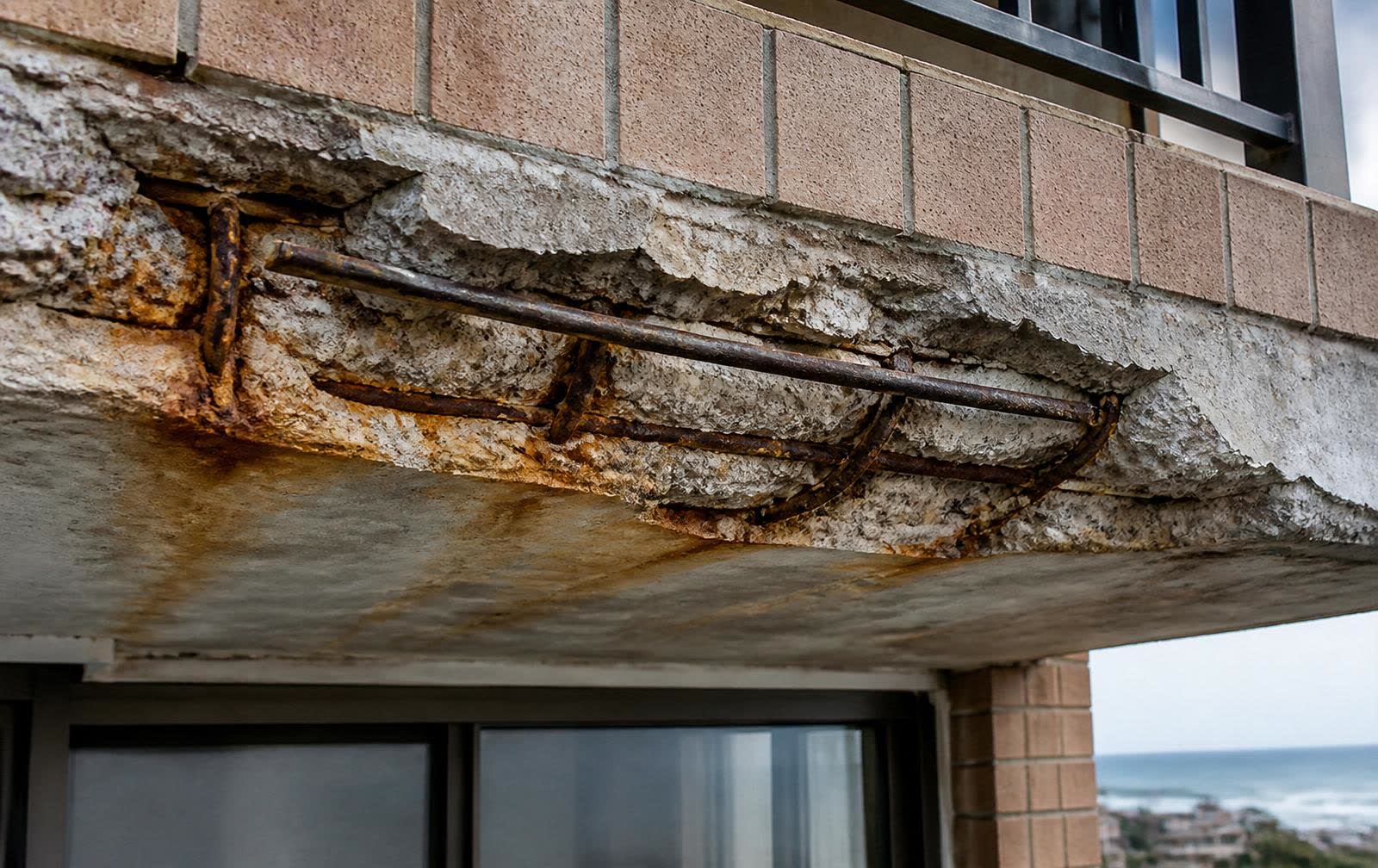
- Spalling: This refers to the flaking or chipping of the facade surface, typically due to moisture infiltration and freeze-thaw cycles.
- Corrosion: Metal components within the facade can corrode over time, especially in coastal areas where salt exposure is prevalent.
- Settling: As buildings age, they may settle unevenly, causing misalignment and additional stress on the facade.
Early recognition of these indicators reduces the likelihood of extensive remediation and higher repair costs.
Each damage type presents a spectrum of severity. For example, fine hairline cracks may be primarily cosmetic and suitable for localised sealing, while wide or multiple cracks that run through structural elements require investigation by a structural engineer and may necessitate strengthening or replacement of affected components. Water intrusion can be transient and manageable by resealing joints, or it can indicate systemic failure of flashings and cladding that requires staged remediation to remove moisture, replace degraded material, and reinstate water barriers.
Spalling often indicates underlying reinforcement corrosion or prolonged moisture exposure; shallow spall patches are repaired with compatible cementitious systems, whereas deep spalling that exposes corroded reinforcement may require cathodic protection, stainless-steel dowels, or partial element replacement. Corrosion of metal fixings and anchors is a critical concern in coastal Wollongong buildings; identifying corroded fixings early prevents progressive detachment of cladding. Settling-related misalignment should be assessed to confirm whether it is active movement requiring underpinning or residual movement that can be managed by flexible joints and adjustments to fixings.
Which Factors Influence Structural Facade Repair Costs in Wollongong?
Multiple variables affect facade repair costs. Understanding these variables enables property owners to budget accurately and anticipate expenditure. For specialist advice, consult firms that offer structural facade repair in Wollongong.
How Do Weathering and Structural Movement Affect Facades?
Weathering is a primary driver of facade degradation. Repeated exposure to rain, wind, and temperature change causes material fatigue, cracking, and spalling. Structural movement,whether from settling or seismic events,produces misalignment and can accelerate existing defects. Timely remediation is required to preserve facade performance and prevent progressive failure.
In Wollongong, the coastal environment intensifies weathering: salt-laden air accelerates corrosion of metallic elements and promotes chemical attack on some finishes. Thermal cycling causes expansion and contraction, which can progressively open joints and propagate cracks. Understanding the local exposure helps in selecting repair materials and protective systems that are suited to the prevailing environment.
What Are Typical Signs of Facade Deterioration in Residential and Commercial Buildings?
Recognising facade deterioration allows prompt remedial action. Typical indicators include the following.
- Visible Cracks: These can vary in size and may indicate underlying structural issues.
- Water Stains: Stains on the interior walls often signal water intrusion from the facade.
- Peeling Paint: This can be a sign of moisture damage or inadequate surface preparation during previous maintenance.
Addressing these signs early limits repair scope and cost escalation.
Diagnostic steps that commonly follow visual detection include moisture metering to locate wet areas, infrared thermography to show hidden delamination or moisture, and targeted probes or small openings to inspect substrate conditions. Early-stage intervention frequently reduces the need for full component replacement and limits downtime for occupants or business operations.
How Do Materials and Labor Impact Repair Pricing?
Material selection and repair complexity directly influence pricing. Higher-grade materials increase initial expenditure but can decrease life-cycle costs. Skilled tradespeople are essential to ensure compliance with specifications; their rates reflect the expertise required for structural repairs.
Typical material categories include cementitious repair mortars for concrete spalls, epoxy or polyurethane sealants for joints and cracks, stainless steel fixings for corrosive environments, corrosion inhibitors, and durable protective coatings or membranes. The choice between a standard coating and a high-performance, corrosion-resistant system will affect both immediate cost and the expected interval before the next maintenance cycle.
Labour costs reflect not only hours but also the competency mix required on site: structural engineers, remedial masons, licensed blasters or applicators, certified rope access technicians, and safety officers. Complex repairs that require staged sequencing, temporary propping, or tailored access solutions will substantially increase labour input and therefore cost.
What Role Do Regulatory Compliance and Safety Standards Play in Cost Estimation?
Adherence to local regulations and safety standards is integral to any facade repair. Non-compliance may result in fines, rework, and additional expense. Ensuring regulatory conformance protects occupants, reduces liability, and secures the long-term value of the works.
Regulatory considerations that influence cost include building approvals, development consent conditions (where applicable), work-safety requirements for working at height, traffic management where pedestrian or roadway access is affected, and any heritage overlays that require specialised materials or methods. Allowance for inspections and certification by suitably qualified professionals should be included when estimating total project cost.
| Factor | Description | Impact on Cost |
|---|---|---|
| Material Quality | Higher quality materials can reduce long-term maintenance costs | Increases upfront costs |
| Labor Expertise | Skilled labor ensures quality repairs but may command higher rates | Increases overall repair costs |
| Regulatory Compliance | Adhering to local regulations prevents fines and rework | Can increase costs if not initially considered |
A clear understanding of these cost drivers enables property owners to make decisions that balance short-term expenditure against long-term performance.
What Is the Step-by-Step Process of Remedial Facade Construction?
Remedial facade construction proceeds through defined stages to ensure durable outcomes. Each stage is required to restore the facade safely and to specification.
How Is a Facade Assessment Conducted Before Repair?
A comprehensive facade assessment initiates the repair sequence. Assessments include visual inspection and, where appropriate, non-destructive testing to quantify damage. Professional appraisal is necessary to produce accurate estimates and select suitable repair techniques.
A typical assessment will record defect type, location, depth, extent and likely cause. It will also document material composition, the condition of steel reinforcement (if applicable), and any evidence of ongoing moisture ingress. The assessor usually produces a report with prioritised remedial recommendations, a scope of works, and an outline cost estimate. Where the assessment identifies potential structural concerns, detailed structural analysis and load checks may be required before remedial works commence.
What Are the Key Stages in Executing Structural Facade Repairs?
Structural facade repairs are typically executed in the following stages:
- Planning: This includes developing a detailed repair plan based on the assessment findings.
- Execution: Skilled laborers carry out the repairs, ensuring that all work meets safety and quality standards.
- Final Inspection: After repairs are completed, a final inspection ensures that all work has been performed correctly and complies with regulations.
Each phase should be completed to the specified standard to ensure the facade is restored and compliant with applicable requirements.
Planning often includes the preparation of method statements, risk assessments, a materials specification, test procedures, and a program that coordinates access, weather windows, and stakeholder communication. Execution requires proper site setup,scaffolding or rope access, containment for dust and debris, scaffold edge protection, and traffic control if the work is adjacent to public areas. During repair, established quality-control checks should be performed, including adhesion and compatibility testing for coatings, patch verification for concrete repair, and reinstatement inspections for joint works.
The final inspection stage should include as-built documentation, test certificates for specialist systems, photographic records, and advice on manufacturer-recommended maintenance intervals. Where warranties are issued, the final inspection commonly forms part of the conditions to validate those warranties.
How to Choose a Reliable Facade Repair Contractor in Wollongong?
Choosing a competent contractor is essential to achieve quality outcomes and to limit future liabilities. Consider credentials, experience, and documented work history when evaluating providers.
Procurement should be structured to compare comparable scopes and specifications. Owners should seek written proposals that clearly describe the work, the proposed materials and systems, access methods, provisional sums, allowances for contingency items, and the contract terms including payment schedule and dispute resolution processes. Comparing vague quotes can be misleading; choose contractors who provide clear, measurable deliverables and who are willing to explain the basis of their pricing.
What Qualifications and Certifications Should Contractors Have?
Verify contractor licences, insurance, and industry certifications before engagement. These credentials demonstrate compliance with regulatory standards and provide client protection. Experience in structural remedial work is a key indicator of capability. For a starting point, consider firms such as South Coast Remedial.
Important checks include current public liability and professional indemnity insurance, evidence of worker training for work at heights and confined spaces where required, and any specialist applicator approvals for proprietary systems (for example, warranties that require installer accreditation). Request copies of licences and insurance certificates and verify their currency with the issuing bodies or insurers when in doubt.
How Can Client Testimonials and Case Studies Inform Your Decision?
Client testimonials and case studies offer objective insight into a contractor's performance. Positive references indicate reliability, schedule adherence, and quality delivery. Review case studies for projects comparable in scope to your own to assess technical competence.
When evaluating testimonials, ask for contactable referees and, where feasible, conduct a site inspection of a completed project. Look for consistent themes in feedback,communication, adherence to budgets and programs, minimisation of disruption, and aftercare. Case studies that include before-and-after imagery, technical descriptions, and client contacts provide stronger evidence of capability than basic marketing statements.
What Are Typical Cost Estimates for Commercial and Residential Facade Repairs?
Facade repair costs vary by building type and damage extent. Understanding these distinctions assists property owners in setting realistic budgets and procurement strategies.
Repair costs should be considered as a package: investigation, temporary works and access, labor and materials for repair, protective reinstatement, testing, and certification. Additional allowances may be needed for contingency items uncovered during works, traffic and pedestrian management, and extended programs where access is constrained. Budgeting conservatively for a contingency sum reduces the likelihood of financial shortfall if latent defects are discovered during repair.
How Do Commercial Facade Repair Costs Compare to Residential?
Commercial repairs commonly incur higher costs due to larger scale, specialised materials, and access requirements. Building height, restricted access, and repair complexity are principal factors that increase commercial pricing relative to residential work.
Commercial buildings frequently require more complex logistics: traffic management plans, extended scaffold durations, and compliance with workplace regulations for occupied commercial tenancies. These logistical requirements increase the overheads associated with a project and therefore the unit cost of repairs. Conversely, residential repairs are often more limited in scope and may be scheduled with less disruption and fewer compliance layers, reducing total project cost in many cases.
What Maintenance Costs Should Property Owners Anticipate?
Property owners should plan for ongoing maintenance costs. Regular inspections and minor interventions limit the need for major remediation. Allocating budget for periodic upkeep preserves asset condition and reduces long-term expenditure.
Recommended practice is to schedule periodic inspections at defined intervals (for example, annual to triannual, depending on exposure) and to budget for planned minor works such as resealing joints, repainting protective coatings, and replacing sacrificial components. A planned maintenance strategy reduces reactive spend and extends the life of higher-cost elements.
Are Facade Repairs Covered by Insurance?
Insurance coverage for facade repairs depends on individual policies and the cause of damage. Owners should consult their insurers to determine cover limits, exclusions, and any potential out-of-pocket liabilities.
Typical insurance considerations include whether the damage was sudden and accidental versus progressive deterioration, as many policies exclude wear-and-tear or gradual degradation. Insurers may cover damage arising from storm events or accidental impact, but routine maintenance and progressive corrosion are commonly owner responsibilities. Early engagement with insurers and clear documentation during the assessment phase helps clarify potential coverage before works commence.
How Long Does a Typical Facade Repair Project Take?
Project duration depends on damage severity and repair complexity. Small-scale repairs may be completed within days. Larger remedial projects often require several weeks. Allow for potential delays in the project schedule.
Factors that extend program time include complex access arrangements, detailed structural repair sequences requiring staged reinstatement, curing times for repair materials, constrained wet-weather windows, and any required regulatory approvals. Contractors should provide a program that outlines critical path items and identifies likely schedule risks so that owners can coordinate tenant notifications and other dependencies.
Frequently Asked Questions
What Should Property Owners Know About Facade Repair Warranties?
Warranties provide assurance on the quality of workmanship and materials. Typical warranties cover materials and labour for a defined period, often ranging from one year to several years. Review warranty terms to understand inclusions, exclusions, and any conditions that may void coverage. A clear warranty demonstrates a contractor's commitment to quality.
When accepting a warranty, confirm the warranty holder (contractor or manufacturer), any maintenance obligations required to keep the warranty valid, and the process for lodging and resolving claims. Request warranty documentation in writing and ensure that any manufacturer warranties are supported by the installer's qualifications where required.
How Can Property Owners Prepare for a Facade Repair Project?
Preparation reduces disruption and supports efficient delivery. Begin with a detailed facade assessment and obtain multiple written quotes from qualified contractors. Secure any required permits and notify tenants or neighbours of the planned works. Establish a contingency within your budget to cover unforeseen issues.
Additional preparation steps include compiling maintenance histories and previous reports, arranging for access to services and utilities if isolations are necessary, and coordinating with building managers and occupiers to agree on site hours, delivery points, and security. Early engagement with stakeholders and clear communication plans reduce on-site delays and disputes.
What Are the Environmental Considerations in Facade Repairs?
Environmental considerations include material selection, waste management, and site impact. Choose low-impact materials where feasible and ensure responsible disposal or recycling of removed materials. Assess potential effects on local flora and fauna and implement mitigation measures when scaffolding or heavy equipment is used. Select contractors with demonstrated sustainable practices.
Practical field measures include segregating and recycling demolition waste where practical, using low-VOC coatings and sealants to reduce off-gassing, and implementing sediment and erosion controls if works are near landscaped areas. Contractors should supply waste disposal records where required by local authorities.
What Are the Risks of Delaying Facade Repairs?
Postponing repairs increases the risk of progressive damage and higher costs. Minor defects can develop into structural failures if left unaddressed. Delays also elevate the likelihood of secondary issues such as mold or pest ingress. Prompt remediation preserves safety and asset value.
From a financial perspective, delaying repairs can increase the scale of future works and lead to emergency interventions that are more expensive than planned remediation. Legally and for occupant safety, delayed repairs can expose owners to liability if deterioration leads to falling debris or compromised fire-resistance properties. Proactive inspection and timely intervention minimise these risks.
How Do Seasonal Changes Affect Facade Maintenance?
Seasonal conditions influence material behavior and degradation rates. In Wollongong, coastal salt exposure and winter storms increase corrosion risk. Summer temperature cycles can induce expansion and contraction, promoting cracking. Schedule seasonal inspections to identify emerging issues and apply appropriate protective maintenance such as cleaning and sealing.
When planning works, choose repair windows that reduce the likelihood of rain during sensitive operations (for example, during waterproofing or coating application) and allow sufficient curing time before extreme temperatures. Contractors should provide guidance on optimal application conditions for selected materials.
What Are the Benefits of Regular Facade Inspections?
Regular inspections identify defects early, enabling targeted repairs that minimise cost and scope. Inspections also verify compliance with safety standards and building codes, reducing legal risk. Maintaining the facade enhances appearance and may support property value. Proactive inspection is a prudent component of asset management.
An inspection regime should be documented, with defect registers, prioritised actions, and a recommended budget allocation for scheduled maintenance tasks. Consistent record-keeping provides an audit trail that supports insurance claims and demonstrates due diligence to regulators or auditors.
Conclusion
Understanding facade repair costs in Wollongong enables informed investment decisions and effective asset protection. By identifying common damage types and cost drivers, owners can allocate budgets and select qualified contractors who deliver compliant, durable repairs. Engage professional advice where necessary to ensure safety and long-term performance. For further guidance, consult specialist resources and accredited service providers.
Effective facade management combines timely inspection, appropriate material selection for the local environment, careful contractor selection, and a sensible maintenance program. When these elements are applied together, owners can limit lifecycle expenditure, reduce unplanned interventions, and maintain the functional and aesthetic value of their assets.
Need an expert facade assessment in Wollongong, the South Coast, Shoalhaven or Southern Highlands? Call South Coast Remedial on +61 468 071 088 for a professional consultation.
Talk to a Remedial Building Expert
Free, no-obligation assessment across Wollongong, the South Coast, Shoalhaven & Southern Highlands.
Call: +61 468 071 088